In short
- With made-to-measure internal doors, the way the door opens is decided by the space around the opening and by what the room needs: quiet, light or just a way through.
- A hinged door seals best and is the simplest; a pocket door saves space but means work on the wall; a barn door slides in view with no building work but closes less tightly.
- A door set flush with the wall, on concealed hinges, makes the wall read as one surface and works well in hallways and living rooms.
- The finish is chosen room by room: resistance to damp in the bathroom, to cleaning in the kitchen and to knocks on the doors used all day.
With made-to-measure internal doors, the first decision is how the door opens, and only then how it looks. The same door can work well in a hallway and badly in a bathroom. Here is what sets each type apart, and which finish to ask for in each room.
Made-to-measure internal doors: what the opening decides for you
A made-to-measure door is built for one specific opening, to its real dimensions rather than a catalogue size. In older Portuguese houses, openings are rarely the same as each other and are not always square. That is where a bespoke door earns its place: it closes without uneven gaps, and nobody has to trim or pack out a standard door to make it fit.
Before thinking about styles, look at three things around each opening:
- The space on each side. A hinged door needs a clear area to swing through. If there is furniture, a radiator or another door in the way, a hinged door may not work.
- The wall beside it. A sliding door needs clear wall at least as wide as the leaf. If it slides into the wall, that wall must be thick enough for the frame and cannot carry sockets or pipes along that stretch.
- What the room needs. A bedroom needs quiet. An open kitchen needs light and an easy way through. A larder just needs a door that stays out of the way.
Our interior doors have a dense, solid leaf, with no honeycomb panels and nothing hollow, and the finish is fully treated before fitting. That settles the quality of the door itself. How it opens is still a decision about the house, and that is what the rest of this article covers.
Hinged, flush, pocket or barn: how each one opens
There are four ways a door can open, and each one solves a different problem.
A hinged door swings on hinges to one side. It is the most common and the simplest to fit. It closes against the frame all the way round, which makes it the best at keeping out sound and light. The cost is space: the leaf sweeps an area as wide as itself, and that area has to stay clear.
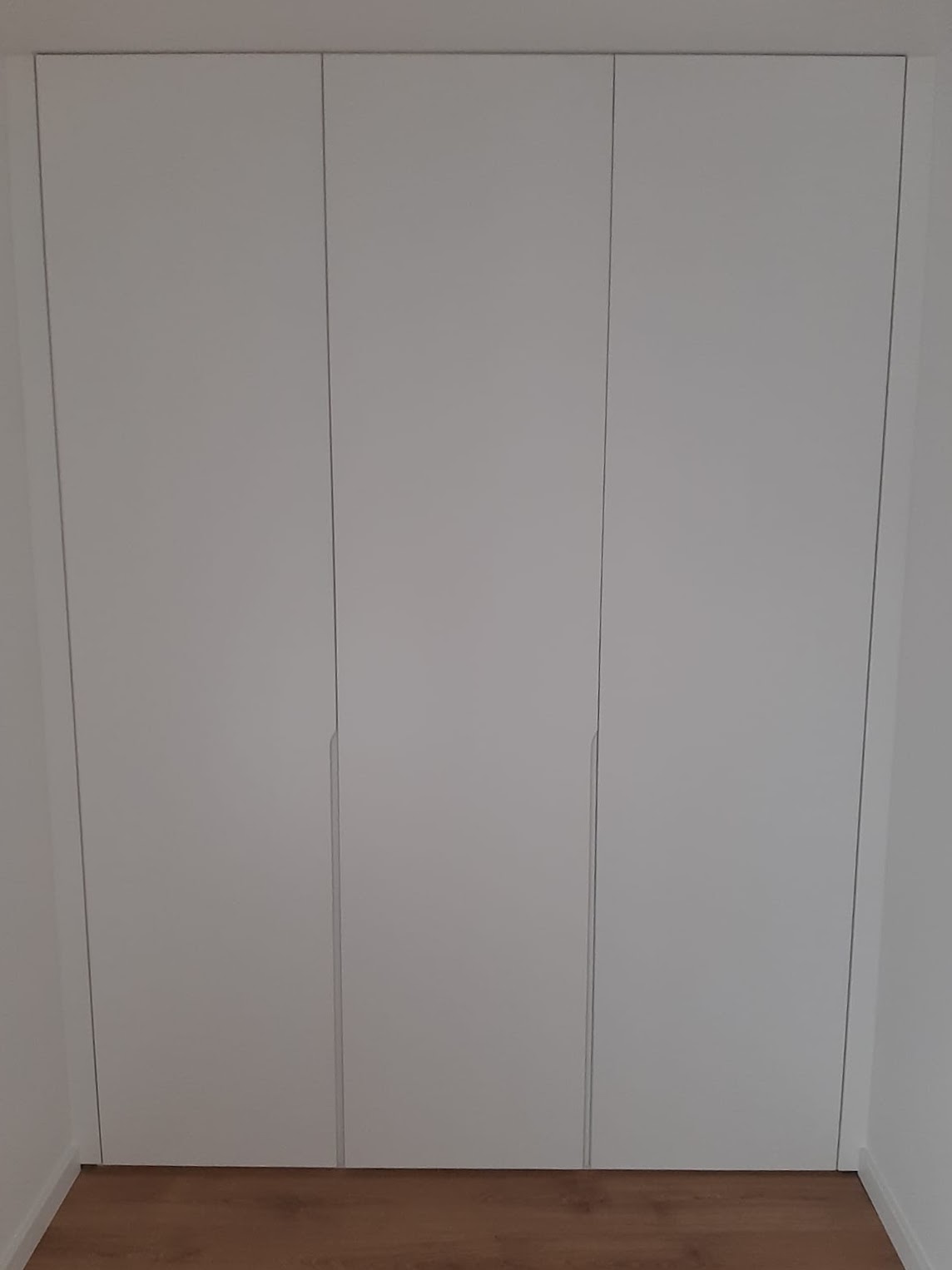
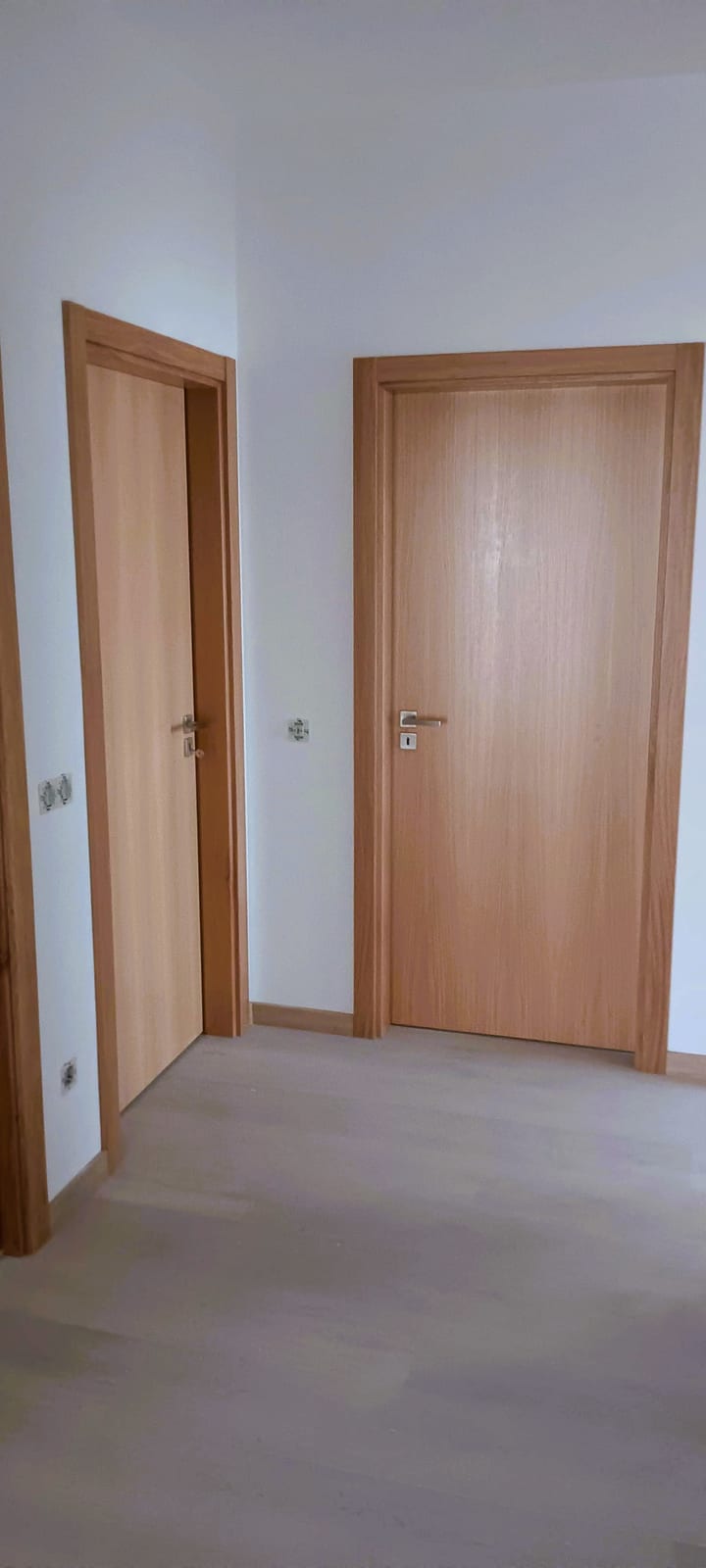
A flush door is a hinged door with a different look. The leaf sits in the same plane as the wall, with no projecting architrave, and the hinges are hidden. When closed, the wall looks continuous. It is a design choice, useful in a hallway with several doors in a row, or in a living room where you would rather the door went unnoticed.
A pocket door slides into the wall, inside its own frame. Open, it disappears. It saves the most space, but it also needs the most work: the wall has to be opened up, or built with the frame inside it. It makes sense during a renovation, less so in a house that is already finished.
A barn door slides in full view, on a track fixed above the opening on the outside of the wall. It needs no work on the wall and has a character of its own, with the track on show. In return, it hangs away from the wall and leaves gaps around the edges, so it does little to block sound. It suits a larder, a walk-in wardrobe or the opening between kitchen and living room.
| Point | Hinged | Flush | Barn | |
|---|---|---|---|---|
| Room to open | Clear swing area | Clear swing area | None in the room | Clear wall beside it |
| Sound insulation | Best | Best | Fair | Poor |
| Work on the wall | No | A little, to finish the opening | Yes | No |
| Look | Classic, with a frame | Continuous wall | Door disappears | Track on show |
| Works well in | Bedrooms, studies | Hallways, living rooms | Small bathrooms, narrow hallways | Larders, walk-in wardrobes, open kitchens |
The right internal door for each room
With the types in mind, choosing room by room gets easier. These are general pointers, not rules.
- Bedroom. Hinged or flush. This is where quiet matters most, and a door that seals all the way round makes a difference. Check which way it opens: it should not hit the bed or the wardrobe.
- Bathroom. Hinged if there is room, or a pocket door if the bathroom is small. Avoid a barn door: the gaps let sound and smells through, and privacy is the whole point of this door.
- Kitchen. It depends whether you want it closed off or open to the living room. To separate it from the rest of the house, hinged. To keep it open most of the time, sliding or barn, perhaps with glass so light gets through.
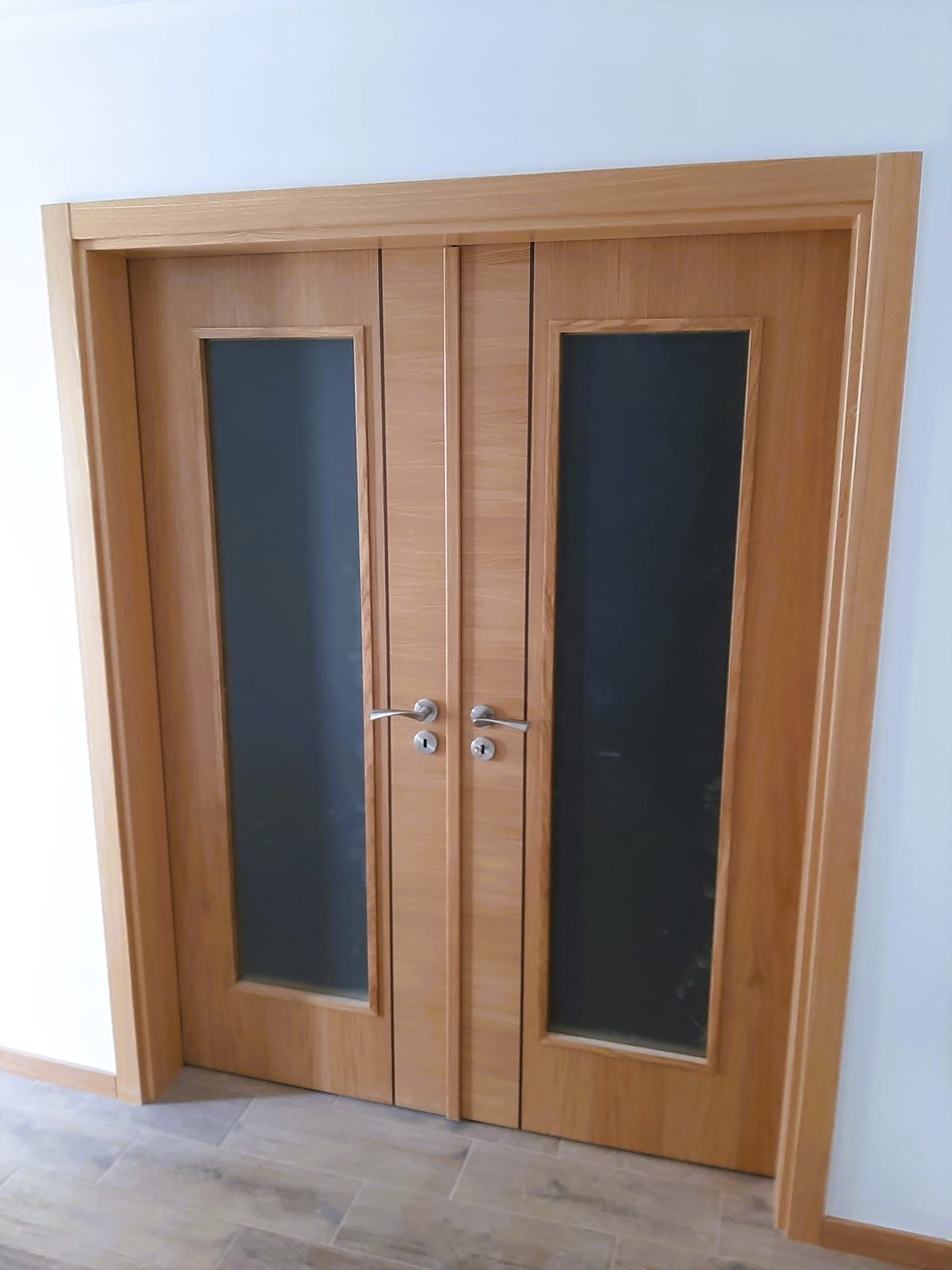
- Living room. Often a double door, glazed, linking the room to the hallway or entrance without cutting off the light.
- Hallway. With several doors in a row, flush doors keep it clean. In a narrow hallway, doors that open into the rooms stop the leaves clashing.
- Larder, utility room, walk-in wardrobe. Here the door is mostly there to hide things. A barn door or a sliding door on the face of the wall does the job without taking up floor space.
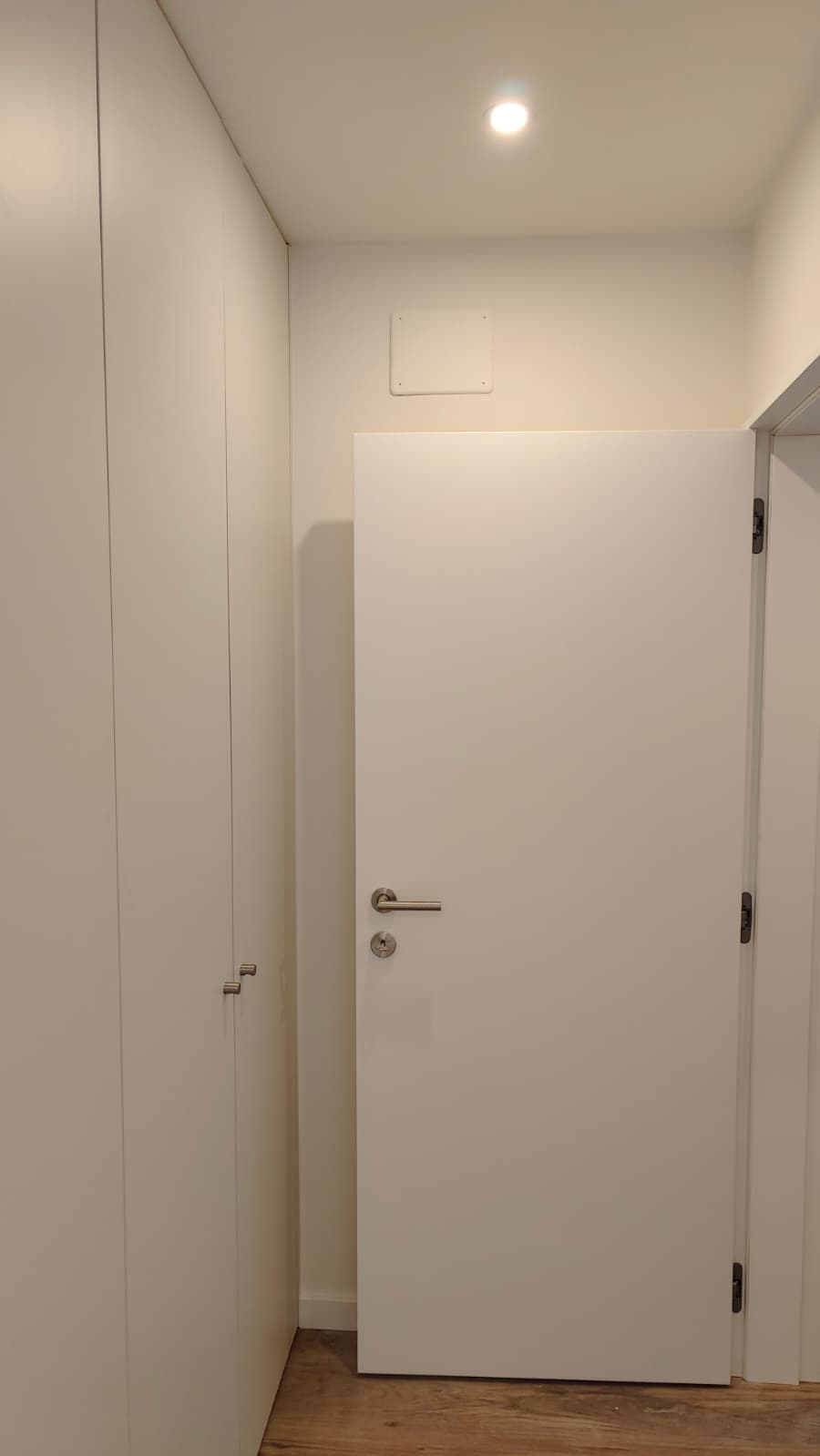
If the door sits next to a wardrobe, as in the cover photo, it is worth designing both at once so the door and the wardrobe fronts match. There is more on that in our article on fitted wardrobes.
Finishes: what each room can take
The finish gives the door its look, but it also decides how the door ages. Three questions help:
- Is there damp? In the bathroom and utility room, the finish has to take steam without swelling. The edges matter as much as the faces, because that is where moisture gets in.
- Will it be cleaned often? In the kitchen, the door picks up grease and fingerprints. A smooth, sealed finish cleans more easily than an open-grain one.
- How much will it be handled? Doors people walk through all day, especially with children or pets around, take knocks at the bottom and marks near the handle. A scratch-resistant finish, or a colour that hides marks, pays off there.
On looks, there are two broad routes. A smooth painted or lacquered door stays quiet and can match the wall colour, which pairs well with flush doors. A door with the wood grain on show, such as oak, warms a room and draws more attention. Many houses keep every door the same and only change the ones leading into the living room.
Do not forget the hardware. We work with concealed, stainless steel and traditional hinges. Concealed hinges are what make a flush door possible. Stainless steel copes better with damp. Traditional hinges suit older houses, where a visible hinge is part of the design. Choose the handle with the door: a pocket door needs a recessed pull, or the leaf will not slide into the wall.
Before the survey: what to have decided
For the measuring visit to go smoothly, it helps to arrive with this worked out, room by room:
- Which doors are being replaced. All of them, or only some. If only some, describe the ones staying, so the new ones do not clash.
- How each door opens, based on the space around it and what the room needs.
- Whether any wall work is planned. A pocket door is only straightforward if the wall is being opened anyway.
- The final floor. The door height depends on the finished floor. If the flooring is changing, the measurements need to allow for it.
- The finish and hardware, chosen with samples in front of you, in the light of your own home.
If you are managing the work from abroad, photos of each opening with a tape measure in shot are a useful start before anyone visits.
A made-to-measure door is not always needed. If the openings are standard sizes, square, and you only want to swap the leaf for a similar one, an off-the-shelf door may be enough. Bespoke pays off when the openings are irregular, when you want a flush or pocket door, or when the door has to match a wardrobe or wall panelling.
The quote is free. Once the openings have been seen and these choices made, it becomes clear which door makes sense in each room, and why.
Frequently asked questions
Which type of internal door takes up the least space?
A pocket door, because the leaf slides into the wall when it opens. It does need a wall with enough thickness and clear length to hold the frame. Where that is not possible, a sliding or barn door on the face of the wall also stays out of the room, but needs clear wall beside the opening.
Does a sliding door block sound as well as a hinged one?
Generally not. A hinged door closes against the frame all the way round, while a sliding door always keeps some clearance so it can move. For a bedroom or a study where quiet matters, a hinged door is usually the safer choice.
What is a flush internal door?
In this article, a door whose leaf sits in the same plane as the wall, with no projecting frame or architrave, hung on concealed hinges. When closed it reads almost as part of the wall, and it can be painted the wall colour to disappear further.
What kind of door is best for a bathroom?
A solid leaf with a finish that copes with damp and well sealed edges. In a small bathroom, a pocket door stops the leaf eating into the space around the basin or toilet. A barn door is the least suitable, because it leaves gaps all round.
How much do made-to-measure internal doors cost?
It depends on how the door opens, the size of the opening, the hardware and the finish, and a pocket door also means work on the wall. That is why the figure is only set after seeing the openings. The quote is free.